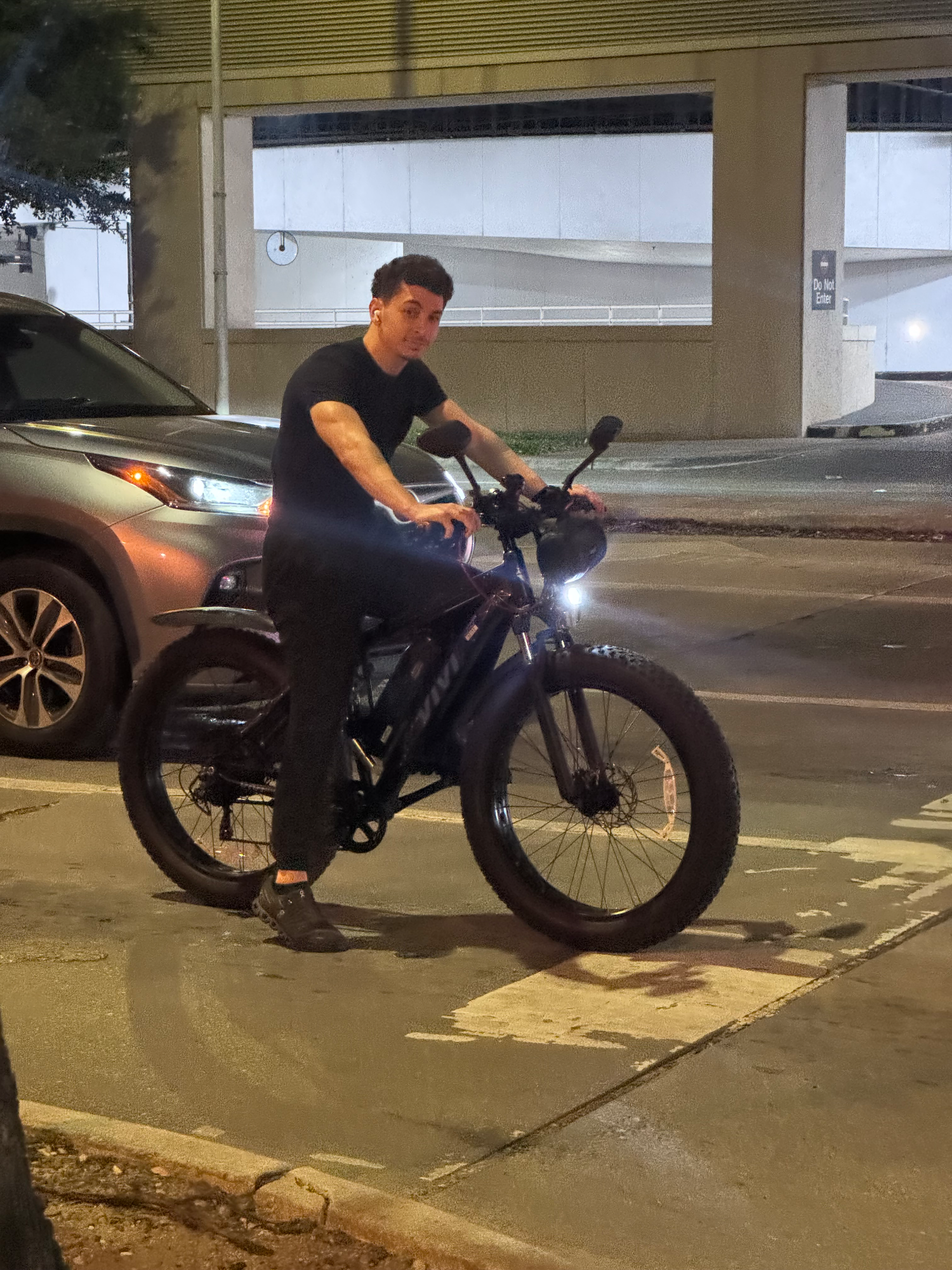
why build instead of buy
why buy an e-bike when you can build one yourself? that was the mindset. i purchased individual components of a fat tire e-bike and challenged myself to assemble it from scratch. as a mech-e student who loves building, this was the perfect hands-on project that combined design with a real need: reliable transportation around rice's campus.
what started as a campus commuting solution evolved into my primary mode of transportation. for the past two years, this bike has been my daily driver: off-campus housing to classes, the gym, around houston on public roads. the 10-minute commute beats walking or waiting for buses, and the custom mods have turned it into a truly personalized machine.
by the numbers
base components
i selected components based on extensive research of the vivi f26ful fat-tire platform. studied the manufacturer specs and several user builds. the fat-tire design was a fit for houston's varied terrain and the occasional rough road.
key specs:
- 1000W brushless motor for solid acceleration
- 48V battery system, 28-mile range
- fat tires for stability and comfort
- front suspension fork (later upgraded after the accident)
- cable disc brakes
the build
initial assembly
purchased all components separately and assembled the bike from the ground up. this taught me every detail of how the bike works: motor controller wiring, brake cable routing, the works. that deep understanding has been invaluable for troubleshooting and modifications.
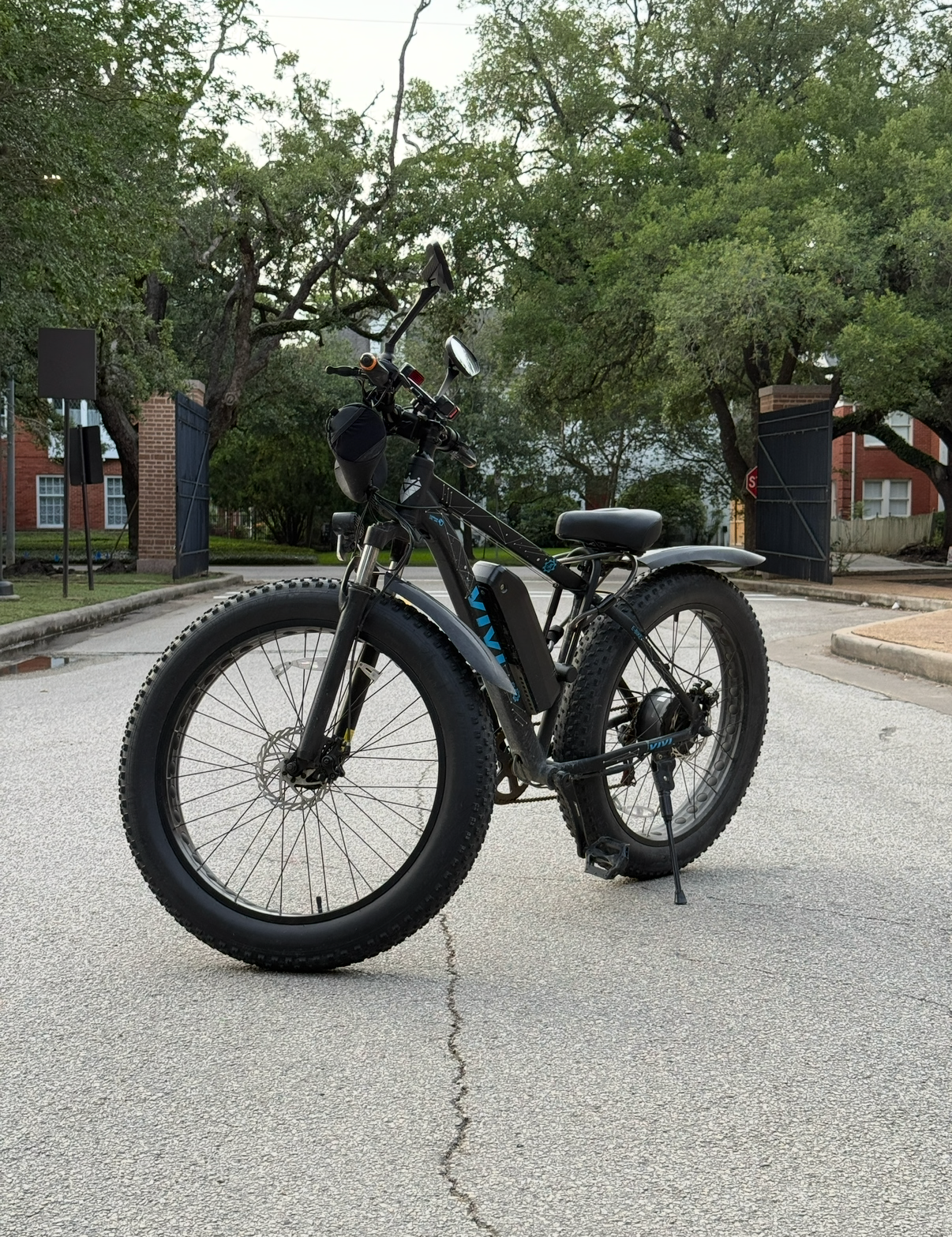
post-assembly, pre-carbon-fiber
carbon fiber weight reduction
after a few months of use, i identified weight as a key area for improvement. the stock components were functional but heavier than necessary, hurting acceleration and battery efficiency. rice has a carbon fiber 3d printer in the engineering facilities, a resource i couldn't pass up.
why carbon fiber:
- material properties. exceptional strength-to-weight ratio. strong under tension, much lighter than aluminum or steel.
- access. rice's carbon fiber 3d printer meant i could prototype and produce parts without expensive outsourcing. iterate quickly, affordably.
swapped to carbon fiber: seat post, handlebars, various mounting brackets and accessories.
result: 2.3 lb / 18% overall weight reduction. small on paper, but on an e-bike every pound matters for battery efficiency and handling. the bike accelerates noticeably quicker and feels more responsive.
custom thumb throttle
the stock wrist-twist throttle worked, but i found it uncomfortable on long rides and hard to modulate at low speeds. so i designed and 3d-printed a custom thumb throttle.
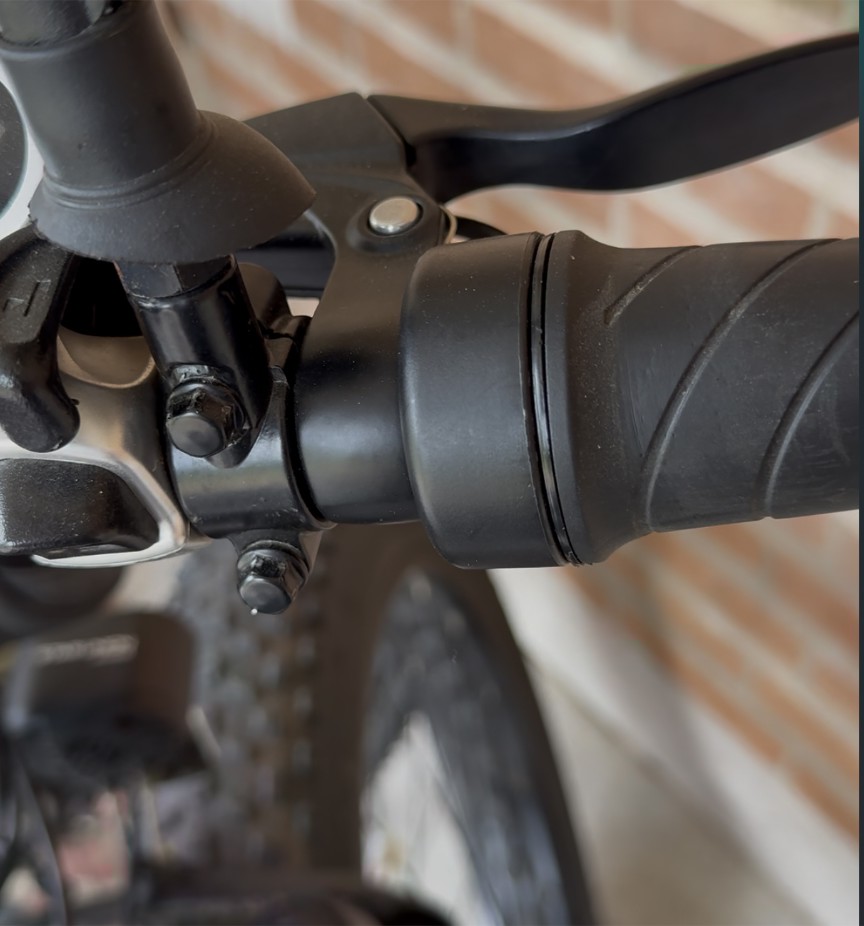
original throttle before adding custom thumb piece
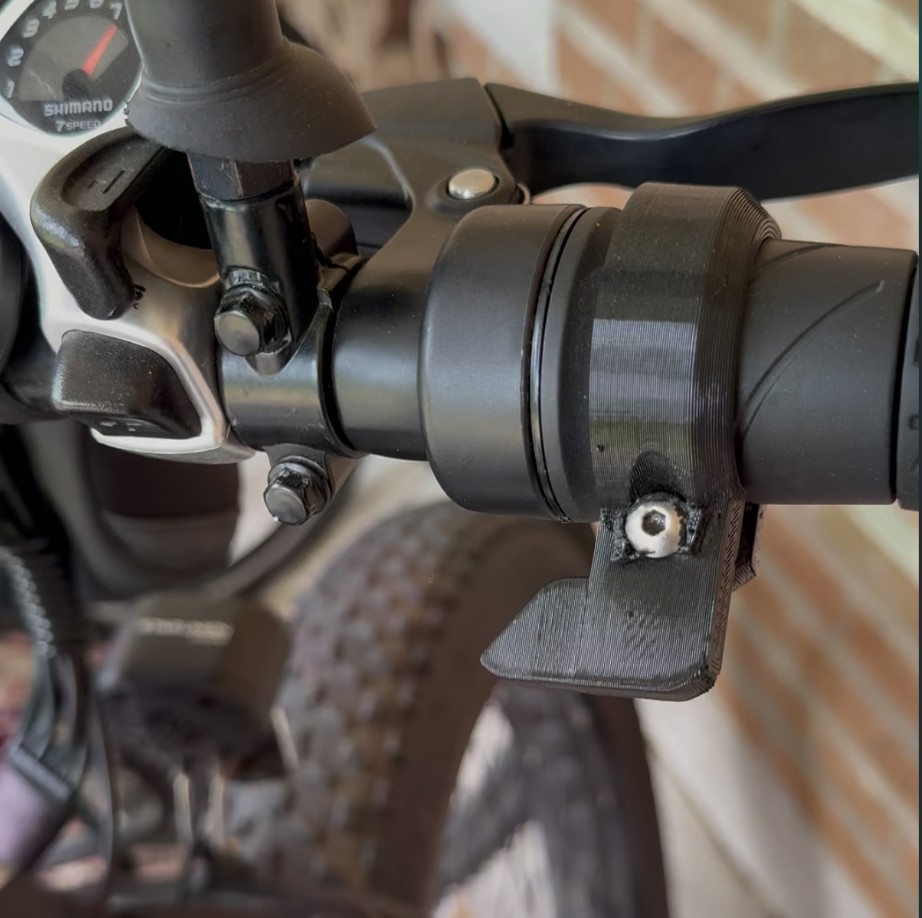
final TPU thumb throttle secured to the handlebar
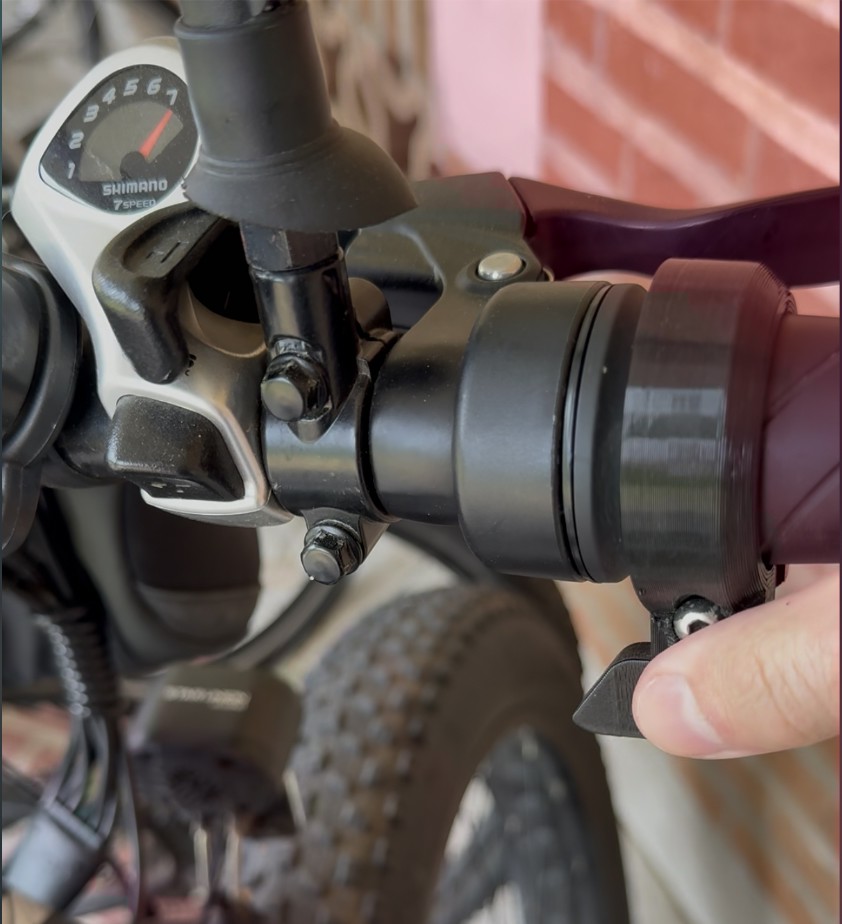
ergonomic thumb operation in action
the iterations
- v1, PLA prototype: too rigid, cracked under repeated thumb pressure.
- v2, initial TPU: switched to TPU for flexibility + durability. comfortable on the thumb, but too bulky.
- v3, size optimization: reduced overall dimensions while keeping structural integrity. tested thumb-contact surface sizes.
- v4, mounting refinement: developed a screw-based tightening mechanism for tool-free install / remove.
- v5, grip integration (final): the final version uses TPU's natural coefficient of friction to grip the original throttle. no adhesives, no permanent mods.
net wins:
- comfortable thumb surface that doesn't fatigue
- excellent grip, no slipping even in rain
- durable through thousands of actuation cycles
- removable for maintenance
ongoing maintenance + the accident
maintenance routine
after two years of daily use, i've developed a maintenance routine that keeps the bike running reliably:
- monthly: replace brake pads (houston stop-and-go burns them fast)
- as needed: replace brake cables when fraying shows up on a visual check
- weekly: tire pressure, chain lube, bolt tightness
- quarterly: full system check: electrical connections, battery health
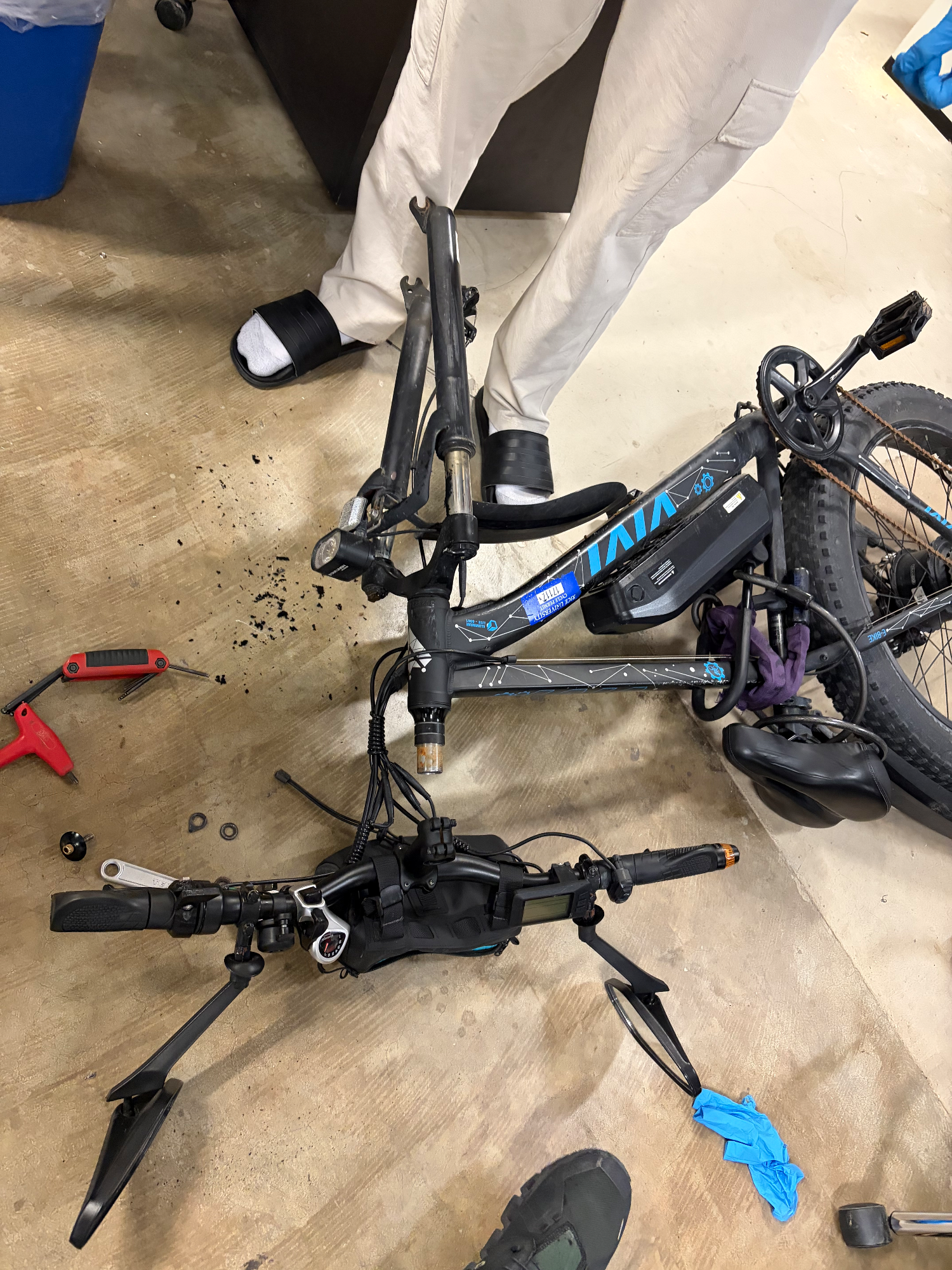
disassembled for major maintenance and upgrades
the accident + fork upgrade
about a year into daily use, i was in a bike accident that damaged the front fork suspension. rather than swap in another stock part, i upgraded to a higher-quality fork with better damping.
statics class analysis
turned the incident into a learning project for my statics class: analyzed stress and strain on the frame during the accident, calculated safety factors, documented the failure mode of the original fork. that analysis informed the replacement choice.
full engineering analysis available in the attached PDF report.
brake system experiments
recently i've been experimenting with different brake configurations using recycled materials from a broken electric scooter: testing brake pad materials and caliper positions to understand how they affect stopping power and modulation. hands-on practice with cable brake systems.
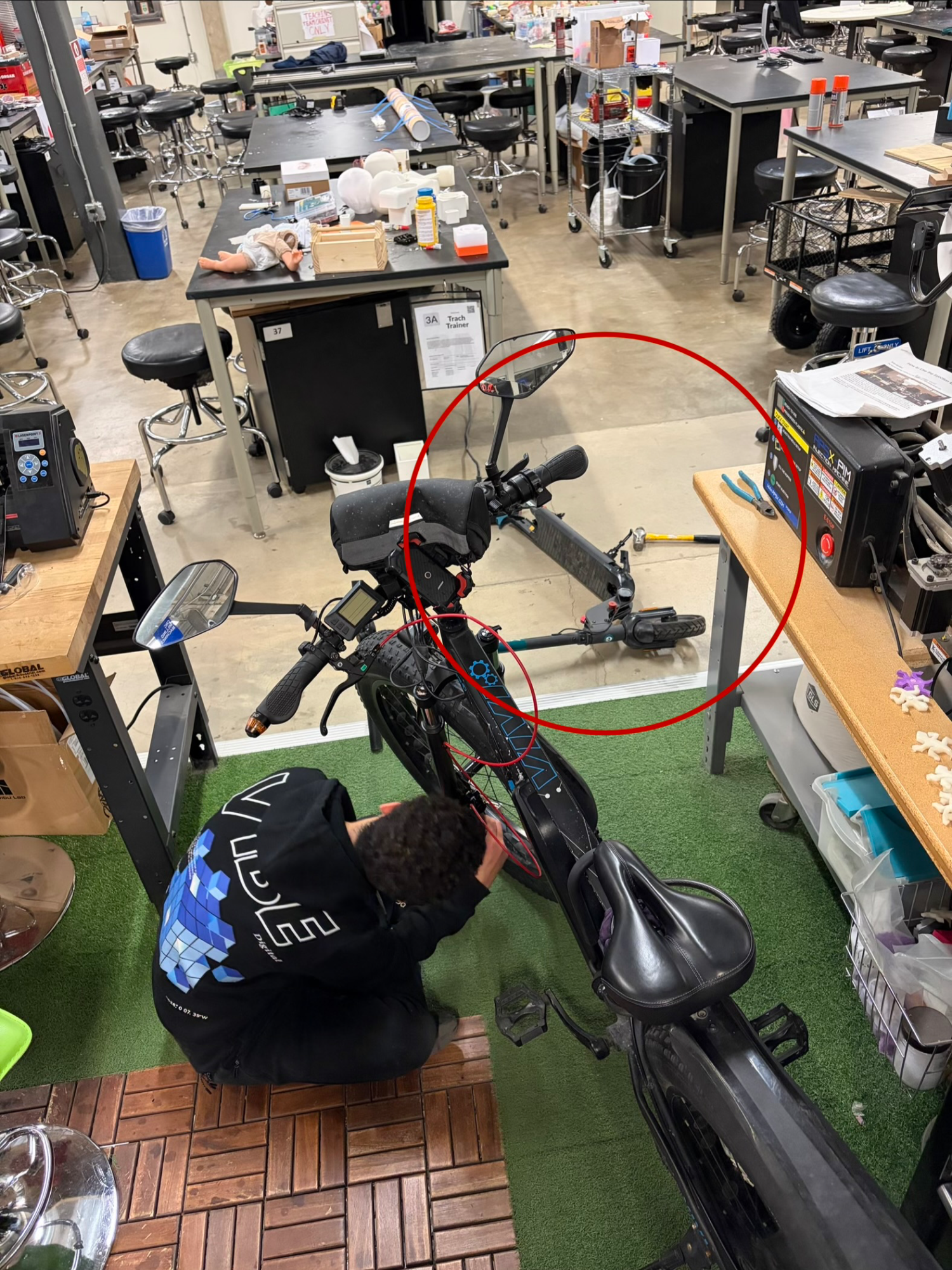
fixing brakes with parts off a junked scooter
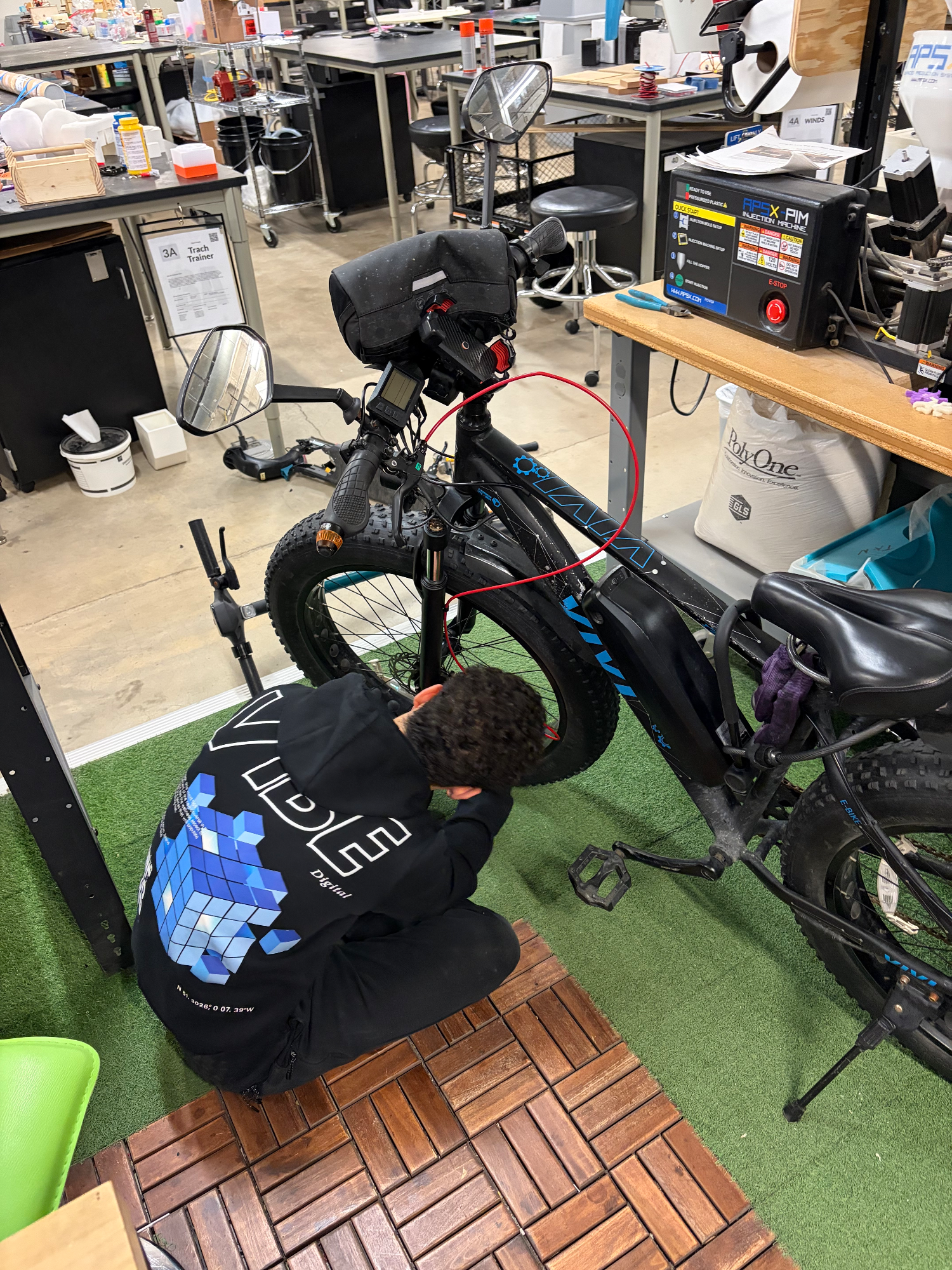
testing and adjusting
real-world performance
year 1. on-campus commuting
my first year with the bike i lived on campus, so it was mostly classes + gym. the fat tires + electric assist made rice's tree-lined paths comfortable and fast, even with a heavy backpack.
year 2. off-campus transportation
now that i live off-campus, the bike is my primary mode of transportation. 10-minute commute on public roads, faster than driving and finding parking. the 1000W motor handles houston's heat and headwinds without issue, and the 28-mile range means i rarely worry about charging during the week.
houston weather
- heat: 95°F+ summer regular and performance is fine. battery and motor stay cool with good airflow.
- rain: TPU throttle and electricals have proven water-resistant. ride in light rain without issues.
- humidity: have to pay extra attention to metal components (chain, brake cables) for rust.
what i learned
technical skills
- working with high-voltage DC systems (48V), motor controllers, electrical troubleshooting
- real bike mechanics: headsets, bottom brackets, brake bleeding, derailleur adjustment
- material selection intuition (stiffness vs flexibility, weight vs strength
- 3d printing for functional parts that have to survive real-world stress, not just decoration
- iterative design: the first version is never the final one
design process
- research before building. studying the vivi platform first saved me from compatibility issues.
- incremental improvements. one upgrade at a time, learn from each.
- real-world testing. lab can't replicate houston traffic, summer heat and daily wear.
- document everything. maintenance intervals + component lifespans taught me a lot about failure modes.
future improvements
- battery upgrade. higher-capacity cells to extend the 28-mile range.
- regenerative braking. motor controllers that support regen for efficiency and brake wear.
- custom lighting system. integrated lights with better visibility than aftermarket clip-ons.
- aerodynamic tweaks. not critical at e-bike speeds, but marginal range gains.
- suspension tuning. fine-tune the upgraded front fork for my weight and riding style.
this project is what drew me to mechanical engineering: design, build, continuously improve something that serves a real purpose in my daily life. the bike isn't just transportation. it's a rolling testbed for ideas and proof that hands-on engineering leads to better understanding.